What are allergies and why are they more common in women?


We can compare allergies to detonating a nuclear bomb over a tiny spider you see in your room. Yes, the spider is no longer a problem, but in the meantime, your house, your neighbors, and probably the entire neighborhood are gone. This exaggerated scenario perfectly illustrates how the immune system reacts disproportionately and excessively to a harmless substance. In its simplest definition, an allergy is when the immune system mistakenly identifies normally harmless substances like pollen, animal dander, or certain foods as dangerous invaders and launches an all-out defense against them. When the immune system, the body's protective shield, labels these "friendly" substances as "enemies," the mechanisms designed to protect us lead to symptoms that can be bothersome and sometimes even dangerous. So, who is behind this "false alarm" system, and how does this process work? More importantly, why doesn't it work the same way for everyone? Research shows that allergic diseases are more common and often more severe in women during adulthood. The question of why the immune system is more easily alerted in the female body is one of the most striking aspects of this complex story. Let's now meet the main characters in this process.

The Main Characters of Allergy: Who Takes the Stage?
In its simplest definition, allergy is an overreaction of the immune system to a substance that is normally harmless to most people. When our body perceives these substances as dangerous invaders, it initiates a defense mechanism. These harmless substances are called allergens .
When our immune system labels an allergen as foreign and dangerous, it produces special antibodies called immunoglobulin E (IgE) to fight this "threat." These IgE antibodies, upon the next encounter with the allergen, initiate a chemical chain reaction that triggers the familiar symptoms of an allergic reaction, such as sneezing, itching, and swelling. Allergic reactions can range from a mild itch to a life-threatening emergency called anaphylaxis . An allergic reaction can be likened to a theatrical play unfolding within our bodies. This play has three main characters, each with their own specific role:
Allergens: These are the characters who play the "bad guy" role in the game, but are actually completely innocent. They are normally harmless foreign substances such as pollen, house dust mites, animal dander, mold spores, or certain foods. The immune system mistakenly perceives them as a threat.
IgE (Immunoglobulin E) Antibodies: These are special "intelligence agents" that the immune system produces to label a specific allergen as "dangerous." When the body encounters an allergen for the first time, it produces IgE antibodies to recognize and react quickly to that agent in the future.
Mast Cells: Think of them as "guard soldiers" stationed in strategic areas of the body, such as the skin, nose, and lungs, filled with chemical "bombs" like histamine. Once IgE antibodies (intelligence agents) are produced, they attach to the surface of these mast cells, turning them into "fire-ready" mines.
The mere gathering of these three characters is enough to trigger the two-act play we call an allergic reaction.

How does an allergic reaction develop?
An allergic reaction doesn't happen suddenly; it's the result of a two-stage process. The body needs to develop sensitivity to an allergen and then react.
First Encounter and "Preparation" (Awareness)
When your body encounters an allergen (such as ragweed pollen) for the first time, you usually show no symptoms. But behind the scenes, your immune system is in a feverish state of preparation:
The immune system misinterprets this pollen as a harmful invader.
It begins to produce IgE antibodies specifically against this "threat".
Thousands of IgE antibodies produced enter the bloodstream and travel to mast cells in the body, attaching firmly to their surface.
At the end of this stage, your body becomes "sensitized" to that pollen. Mast cells, with their IgE hooks, are like ticking time bombs waiting for the same pollen to reappear.
Reunion and "Reaction"
When you encounter the same pollen again, the second act of the play begins, and the main reaction occurs:
The pollen you breathe binds perfectly to the IgE antibodies on the surface of mast cells, much like a key fitting into a lock.
This binding is an alarm signal for mast cells. The cells essentially "explode," releasing powerful chemicals like histamine that they store within them into surrounding tissues.
So what exactly does this chemical cocktail released from mast cells do to our bodies that causes sneezing, itching, and a runny nose?

What does histamine do?
The main culprit behind all the symptoms of an allergic reaction is histamine and other chemicals released from mast cells. Histamine acts like an emergency signal in the body, triggering a series of physiological changes:
It dilates and makes blood vessels leaky: This causes fluid to seep into the tissues, leading to swelling (edema) and redness. Nasal congestion and swollen eyes are due to this.
Increases mucus production: The body increases mucus secretion to expel the "invader." This leads to a runny nose.
It stimulates nerve endings: This stimulation triggers reflex responses such as itching and sneezing.
The effects of histamine vary depending on the body region where the reaction occurs.
Body Area | Typical Symptoms |
Nose and Sinuses | Sneezing, runny/congested nose, itching |
Eyes | Watering, itching, redness, swelling |
Skin | Itching, redness, hives (blisters) |
Respiratory Tract | Cough, wheezing, shortness of breath |
Digestive system | Nausea, abdominal cramps, vomiting, diarrhea |

Why are women so sensitive(!)?
Statistics reveal a surprising fact: while boys are more prone to allergies during childhood, this completely reverses during adolescence. In adulthood, women are affected more frequently and more severely by conditions such as asthma, food allergies, and anaphylaxis (severe allergic shock). The key factor behind this change is sex hormones, particularly estrogen. Beyond being just a reproductive hormone, estrogen functions as a powerful immunomodulator of the immune system. The mechanism by which it potentially increases allergic reactions is multifaceted:
Boosting Humoral Immunity: Estrogen increases Th2 cell function and, consequently, antibody production. This makes it a "natural enhancer of humoral immunity." Since allergies are primarily caused by the production of IgE antibodies, this general effect of estrogen can increase allergic predisposition.
Direct Effect on Mast Cells: Studies have shown that mast cells, which are central to allergic reactions, have estrogen receptors on their surface. This means that estrogen can interact directly with these cells.
Lowering the Allergen Threshold: One of the most important findings is that estrogen can directly stimulate mast cells, triggering the release of mediators such as histamine. More critically, estrogen lowers the allergen threshold required for IgE-mediated degranulation. This mechanism directly explains why women can become symptomatic even when exposed to low levels of allergens that they would normally tolerate, during periods of high estrogen levels (e.g., certain phases of the menstrual cycle).
The Effect of Progesterone and Other Hormones
Progesterone's effect on the immune system is more complex than that of estrogen and often functions in the opposite direction. Progesterone is generally considered an immunosuppressant and may be a negative regulator of mast cell degranulation; that is, it has the potential to mitigate allergic reactions. However, research on this topic has also yielded conflicting results. For example, a study in a mouse model showed that progesterone worsened asthma. This finding suggests that the effects of hormones on the immune system can vary depending on context and other factors, and that further research is needed on the subject.

Menstrual Cycle and Allergies
Hormonal fluctuations during the menstrual cycle are directly related to the exacerbation of allergic diseases in many women. This is especially noticeable during the premenstrual (before menstruation) and perimenstrual (during menstruation) periods.
Perimenstrual Asthma (PMA): It is reported that a significant proportion of women with asthma, up to 40%, experience asthma exacerbations during the premenstrual and menstrual periods. This is a common clinical phenomenon that can lead to increased emergency room visits and hospitalizations.
Menstruation-Related Near-Fatal Asthma (NFA): Multicenter studies have revealed that menstruation is a significant trigger for NFA, which are life-threatening, severe asthma attacks.
Atopic Dermatitis: In female patients, worsening of atopic dermatitis (eczema) symptoms during the premenstrual period is a commonly observed and measurable event. A significant increase in itching and lesions on the skin is reported.
Pregnancy is a period of profound hormonal changes in the body, and this can significantly affect the course of allergic diseases.
Asthma is a common condition affecting 3–8% of pregnancies in the United States. Asthma exacerbations during pregnancy are considered a serious risk factor for both the mother (risk of preeclampsia) and the baby (premature birth, low birth weight).
Another noteworthy finding is that many women with no previously known allergies experience allergic symptoms for the first time only during pregnancy. This suggests that the hormonal environment during pregnancy can bring out an underlying allergic predisposition.
Autoimmune Hypersensitivity
In rare cases, hormones can not only exacerbate allergic reactions but also become the allergen themselves. It is suggested that hormones such as estrogen or progesterone can act as haptens by binding to the body's own proteins, stimulating the immune system and triggering a response. This can be considered an "autoimmune hypersensitivity." A study of patients with perimenstrual symptoms (asthma, migraine, joint pain) found high levels of specific IgE, IgG, and IgM antibodies against estrogen and progesterone. More importantly, the fact that this specific hormone hypersensitivity has also been identified in patients with a history of recurrent pregnancy loss suggests that this phenomenon can have serious clinical consequences.
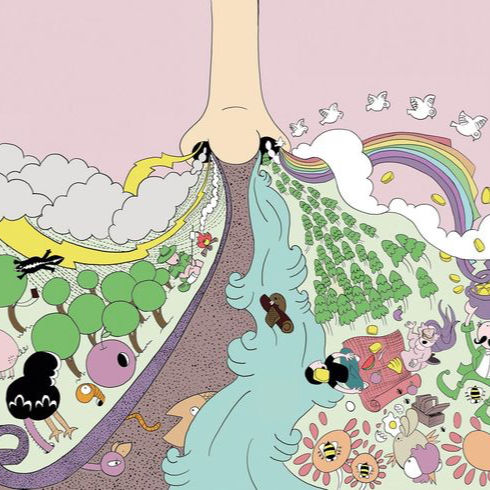
In conclusion, allergies stem not from a weakness in the immune system, but rather from an overly strong, overly vigilant, and sometimes misguided defense mechanism. The hygienic conditions of modern life eliminate threats that the immune system has evolutionarily become accustomed to, while hormones, particularly estrogen, can make this system even more sensitive. Therefore, allergies, especially in women, represent a complex picture shaped not only by environmental factors but also by biology and hormones. The fact that a tiny amount of pollen can unleash such a storm reminds us once again how powerful, yet how delicate, the balances upon which our bodies are built.
Resources and Suggested Readings:
Abbas, A.K., Lichtman, A.H., & Pillai, S. (2021). Cellular and molecular immunology (10th ed.). Elsevier.
Akdis, CA, & Akdis, M. (2015).Mechanisms of allergen-specific immunotherapy: Multiple suppressor factors at work in immune tolerance to allergens. Journal of Allergy and Clinical Immunology, 136 (3), 621–631.
Galli, S.J., Tsai, M., & Piliponsky, AM (2008).The development of allergic inflammation. Nature, 454 (7203), 445–454.
Janeway, C. A., Travers, P., Walport, M., & Shlomchik, M. J. (2017). Janeway's immunobiology (9th ed.). Garland Science.
Kay, AB (2001). Allergy and allergic diseases. New England Journal of Medicine, 344 (1), 30–37.
Murphy, K., Weaver, C., & Berg, L. J. (2022). Janeway's immunobiology (10th ed.). Garland Science.
Stone, KD, Prussin, C., & Metcalfe, DD (2010).IgE, mast cells, basophils, and eosinophils. Journal of Allergy and Clinical Immunology, 125 (2 Suppl 2), S73–S80.
Valenta, R., Karaulov, A., Niederberger, V., Zhernov, Y., Elisyutina, O., Campana, R., … Akdis, CA (2018). Allergen extracts for in vivo diagnosis and treatment of allergy: Is there a future? Journal of Allergy and Clinical Immunology, 142 (1), 1–9.
Zaitsu, M., et al. (2007). "Estradiol enhances mast cell degranulation and mediator release." Journal of Allergy and Clinical Immunology.
Skobeloff, E.M., et al. (1996). "The influence of the menstrual cycle on asthma exacerbations." Annals of Emergency Medicine.


Comments