What do biologists do? Becoming a Marine Biologist


Journey into the Blue Depths: A Roadmap to Becoming a Marine Biologist
For many of us, our fascination with the ocean began in childhood, in the coral kingdom of "The Little Mermaid" or the colorful world of "Finding Nemo." Perhaps it was the enormous white whale in Moby Dick or the unique voyage of discovery in Jules Verne's Twenty Thousand Leagues Under the Sea . But this field is based on a much deeper, academic, and sometimes surprisingly technical reality than simply swimming with dolphins. From Aristotle's first detailed observations in the 4th century BC to today's high-tech research, marine biology is the effort to understand this vast ecosystem that covers 71% of our planet. Oceans, covering 71% of our planet, are not just a body of water, but the epicenter of the global economy and ecological balance. Beyond the "Finding Nemo" romance in popular culture, marine biology is an analytical and strategic necessity in an environment where 95% of the oceans remain a mystery and an average of 2,300 new species are discovered every year. This field does not offer a single, uniform lifestyle; On the contrary, with its interdisciplinary depth, it offers a broad spectrum ranging from high-tech focused exploration operations to mathematical modeling.
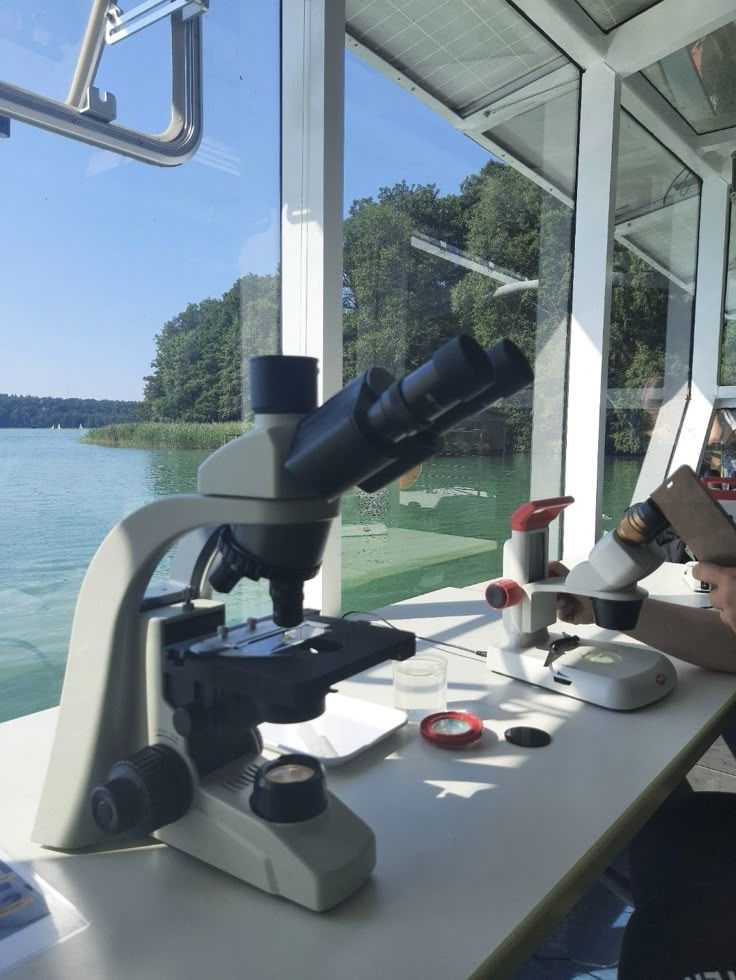
Fieldwork vs. Office Work: 90% Data, 10% Water
Contrary to popular culture, marine biologists don't spend every day scuba diving. To be realistic, fieldwork makes up only about 10% of their total working hours, or between one week and three months of the year. But even during that time, the pace is incredibly intense: when you're in the field, you work 12-16 hours a day, 7 days a week, under physically demanding conditions. This process, involving nets, fishing lines, and sea mud, is essentially a massive data collection operation.
The logistical and financial burden in the rest of the profession is best summarized by these words:
For the rest of the year, you will be working in the lab or office, collecting data, conducting analyses, and most importantly, writing research project forms to continue your research.
What kind of marine biologist do you want to be?
Area of Expertise | Work Environment | Main Focus |
Deep Sea Biology | Research vessels, ROV control rooms, and rarely submarines. | Extreme environments below 1,000 meters; discovery and mapping of new species. |
Fish Biology (Ichthyologist) | Boats and ships; nets, fishing lines, and long-line rigs. | Fish populations; field work that involves getting hands dirty, cutting feed, and requiring physical exertion. |
Benthic Biology | Seabed, coastal areas and reefs (SCUBA/Snorkeling focused). | Life on the seabed; the changes over time in corals, sponges, and invertebrates. |
Marine Ecology | Reefs and coastal ecosystems (Direct observation focus). | Interspecies interactions; for example, the relationship between a clownfish and an anemone or a parrotfish and a reef. |
Population Biology | Office and laboratory; intensive mathematical modeling and coding. | Fisheries management; legal size limits provided to governments to prevent population collapse. |

Deep Sea Biology
Deep-sea biology is the most technology-dependent branch of marine science, studying extreme and inaccessible areas of the ocean, such as the "midnight zone." Given that only about 5% of the ocean floor has been mapped using sonar, this discipline holds the highest potential for "exploring the unknown." From a strategist's perspective, this branch combines the "explorer" identity with "data mining."
Operational processes consist of logistically challenging and costly expeditions lasting between one week and one month each year. Scientists rely on Remotely Operated Vehicles (ROVs) and, rarely, manned submarines to collect data in the extreme pressures and darkness of the deep sea.

Benthic Biology
Benthic biology is the strategic study of organisms and habitats that live on the seabed (benthos). "Ecosystem engineers" such as corals, sponges, and invertebrates determine the architecture of life on the seabed.
The most important factor in improving data quality in this field is direct observation. For benthic biologists, SCUBA and snorkeling are not just tools, but essential operational competencies that ensure scientific accuracy.
Strategic Focus Areas of Benthic Research:
Coral Reefs and Their Health: Monitoring coral bleaching caused by climate change and developing restoration strategies.
Artificial Reefs: Analyzing how man-made structures colonize marine life and increase biodiversity.
Benthic Invertebrates: Documenting the filtering and nutrient cycling roles of sponge and crustacean communities in the ecosystem.
When moving from the study of physical habitats to the field of ecology, which examines the complex and often surprising behavioral interactions between species, the level of analysis becomes more dynamic.
Marine Ecology
Marine ecology is a qualitative force that studies the relationships between species and their environment. Strategically, this field is concerned with deciphering the "language" of the ecosystem. For a marine ecologist, firsthand observation (SCUBA or video recordings) is invaluable for understanding the environmental triggers of a behavior.
For example, the grazing behavior of parrotfish on coral reefs is not merely a feeding process; a single parrotfish produces approximately 450 kg of white sand (through its feces) per year, directly impacting the geological structure of islands and beaches. Similarly, interactions such as the symbiosis between anemone and clownfish, or the way orcas respond to ships as a "cultural" trait, demonstrate the complexity of the ecosystem's social structure.

Fish Biology
Fish biology plays a critical role in global food security by studying the health and population dynamics of species central to the marine food chain. This branch is the most hands-on (directly intervening) intensive area of marine biology. Operational reality involves battling nets, conducting long-line surveys, and performing "dirty" but vital tasks like cutting bait for hours on end during intense field periods of 1 to 3 months on board.
Studies, particularly on shark species (Tiger, Hammerhead, Bull, etc.), provide key data for ecosystem health. However, as a consultant, I must remind you that those exciting months spent in the field are balanced by desk-based processes such as laboratory analyses, grant writing, and academic publication preparation for the rest of the year. For career longevity, data processing capacity is just as strategically important as physical field performance.

Biologists Who Don't Get Wet
There's a fact that surprises many young researchers: some marine biologists rarely get wet throughout their careers. Population biologists use mathematical models and coding languages instead of masks and flippers to save the ocean. These specialists take numerical data from field researchers and use complex algorithms to calculate when fish stocks might collapse or the ideal catch sizes for sustainable fishing. These numerical models are a vital mechanism that determines everything from government environmental policies to commercial fishing regulations.
We've only seen 5% of the ocean.
The oceans are the greatest mystery of our planet. Although we have mapped about 5% of the ocean floor using sonar, the portion visible to the naked eye is far less than that. Deep-sea biology is one of the most logistically challenging endeavors in the world, requiring incredibly expensive submarines and Remotely Operated Vehicles (ROVs). But this challenge also brings with it an invaluable thrill.
The scientific world discovers an average of 2,300 new marine species every year. The greatest motivation for deep-sea biologists is "the potential to see or discover a creature that no human has ever seen before." The pressure and darkness of the depths continue to hold thousands of secrets waiting to be discovered.

Killer Whales That Follow Fashion Trends
If you think ocean dwellers are just machines driven by instinct, you're wrong. Killer whales (orcas) possess a sophisticated capacity for "cultural transmission," just like humans. Scientific records speak of a bizarre "fashion" that began in an orca colony in the 1980s: one orca started wearing a dead salmon on its head like a hat, and this behavior quickly spread to other colonies. This is the clearest evidence of how complex behaviors can be in the animal world, spreading not through genetics, but through social learning and cultural interaction.

The Anatomical Chasm: Sharks and Bony Fish
As a science writer, I must emphasize that we shouldn't dismiss sharks as simply "fish." Sharks and rays have cartilaginous skeletons, while many other fish species (trout, tuna, etc.) belong to the bony fish class. One of the most fundamental differences between these two groups is their swimming strategy. Bony fish use a "swim bladder" to control depth, while sharks lack this organ; instead, they rely on their massive, fatty livers to maintain buoyancy.
Furthermore, the secret to the famous harmony of schools of fish lies in the mechanoreceptors in the lateral line system that runs along their bodies. These cells sense even the smallest changes in water pressure, allowing the fish to perceive its surroundings without seeing them. Meanwhile, the legend that sharks can smell a drop of blood from miles away is somewhat exaggerated; the scent molecules would have to physically reach the shark's nose via a current.
The Limits of Change and Adaptation
Nature is more creative than even the wildest scenarios. In "Finding Nemo," the character Marlin should have biologically transformed into a female over a week when Nemo's mother died. This is because, among clownfish, the largest male has the ability to change sex to maintain the hierarchy.
Starfish, on the other hand, hunt in a way that rivals characters from a horror movie. When they slightly open the shell of their prey, such as oysters, they extend their stomachs outwards and tuck them inside the shell. They carry out the digestion process in the prey's own "home," and then retract their stomachs back into their bodies.

The Intelligence of Giant Manta Rays
Giant manta rays possess a cognitive depth more akin to a dolphin or elephant than a fish. With the largest brain-to-body ratio in the fish world, the telencephalon , the brain region responsible for learning and social interaction, makes up 61% of the total brain mass. They are unique not only in their intelligence but also in their anatomy; manta rays are the only vertebrates to possess six pairs of limbs (two wing-like pectoral fins, two pelvic fins, and two cephalic lobes around the mouth).
This evolutionary design in manta rays also inspires robotics experts. The locomotion mechanism of these giants, which glide with 89% propulsive efficiency , forms the basis of future underwater exploration vehicles. Furthermore, their behavior suggesting a mirror-recognizing ability continues to amaze us in terms of self-awareness.
Carcination
In evolutionary history, the phenomenon called "carcinization" demonstrates how much nature admires a particular design. Many completely independent species have evolved into the crab form over time. For example, the ancestors of many species we consider crabs today were actually shrimp-like or "thin lobster" creatures. However, evolution seems to have decided that the crab body plan was the most successful solution in certain environments.

The Ocean's Future Heroes
Marine biology is a challenging journey, with an education process that can last over a decade and intense competition. However, this field is not just a scientific career, but also a mission to protect the future of our planet. Today, many coastlines in the developing world need "local heroes" who understand and protect their ecosystems.
Oceans are the source of life as we know it, and we are still unaware of many of the secrets hidden in their depths. So, what secrets do you think might be waiting to be discovered by you in the 95% of the ocean that remains unexplored?


Comments