Wasabi: Is the Green Paste on Your Sushi Plate Antibacterial?


When you take a small bite of that bright green paste on the edge of your plate at a sushi restaurant, you feel that famous "burst" that starts deep in your nose and brings tears to your eyes within seconds. For most of us, this experience is an indispensable ritual of modern gastronomy. But this pungent flavor is more than just a condiment; it's a story of millennia of Japanese culture, complex food science, and one of nature's most powerful pharmacies.
Wasabia japonica, belonging to the Brassicaceae (cabbage family) in botanical classification, is considered one of the most difficult and sensitive plants to cultivate. Growing in the mountainous valley rivers of Japan, in continuously flowing, cold, and clean water beds, this plant's maturation process varies between 18 months and 3 years. This long maturation process allows for the accumulation of high concentrations of glucosinolates, the plant's secondary metabolites. Clinically, the most critical process begins with the breakdown of the cellular structure of the plant's underground stem, called the "rhizome." This mechanical process (crushing) releases the myrosinase enzyme, converting the glucosinolates into allyl isothiocyanate (AITC), a highly volatile sulfur compound.
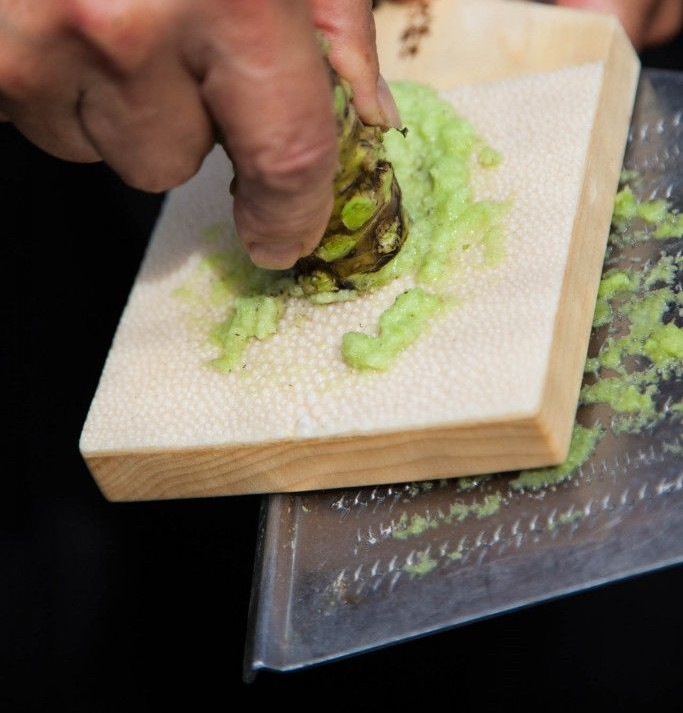
The "fake" wasabi on your plate.
The truth is, about 95% to 99% of the wasabi served in restaurants outside of Japan (and even in many within Japan) isn't actually real wasabi. The fact that the real plant is extremely expensive and delicate has given rise to an "imposter" industry. What you typically eat is a mixture of horseradish ( Armoracia rusticana ), mustard powder, and green food coloring. Cornstarch and chemical additives may even be included to fix the texture.
Differences Between Real Wasabi ( Wasabia japonica ) and Imitation Wasabi
Feature | Real Wasabi ( Wasabia japonica ) | Imitation (Fake) Wasabi |
Contents | Freshly grated wasabi rhizome (stem) | Horseradish, mustard, green dye |
Taste Profile | Complex, fresh, slightly sweet, and herbal. | Harsh, sharp, monotonous, and burning. |
Painful Experience | A "clean" warmth bursting in the nose | A harsh burning sensation that lingers longer in the mouth. |
Tissue | Freshly grated, slightly grainy and juicy. | A smooth, clay-like, and dense paste. |
Permanence | It loses all its flavor in 15-20 minutes. | Its taste and bitterness are retained for a long time. |
Why is your nose burning instead of your tongue?
While capsaicin in chili peppers attaches to pain receptors on your tongue, the spiciness of wasabi is entirely volatile. When wasabi rhizomes are grated, the plant cells break down, and enzymes release a compound called Allyl Isothiocyanate (AITC) . Because this compound floats rapidly through the air, it reaches your sinuses and the TRPA1 receptors in your nose directly.
The scientifically fascinating part is this: these receptors are "danger detectors" that sense not only wasabi, but also dangerously cold objects, tear gas, exhaust fumes, and cigarette smoke. Because your body perceives this volatile irritant as a threat, it tries to expel the foreign substance through tears and coughing.
Wasabi Alarm: This pungent smell is so potent that Japanese researchers have developed special fire alarms for the hearing impaired that emit the scent of wasabi instead of smoke; because wasabi sends a signal strong enough to wake even a sleeping person in seconds.

Why is it served with raw fish?
The presence of wasabi on a sushi plate is not just a matter of flavor preference, but a historical safety measure. In times before modern refrigeration techniques, wasabi was a vital hygiene tool. Wasabi not only neutralizes unwanted odors in fish, but also enhances the "umami" character of seafood.
Antibacterial Shield: Wasabi is one of the most effective natural weapons against E. coli and Staph (Staphylococcus) bacteria, the main culprits of food poisoning.
Parasite Defense: It has the power to neutralize Anisakis parasites, which can be found especially in seafood such as salmon and squid.
"A tradition thousands of years old is no coincidence; Wasabi is nature's most powerful antidote against food poisoning from consuming raw fish."

From Cancer to Heart Health
Wasabi is among the superfoods that have attracted the most attention from modern medicine thanks to its sulfur-based phytochemicals (ITCs). These compounds neutralize carcinogens and strengthen the body's defense mechanism. Research has identified preventive effects against leukemia, stomach, esophageal, lung, and gastrointestinal (stomach-intestine) cancers.
When it comes to heart health, wasabi works on three fronts:
Blood Pressure Management: Thanks to its high potassium and low sodium content, it helps relax blood vessels and offers protection against hypertension.
Anticoagulant: By preventing the clumping (aggregation) of blood platelets, it minimizes the risk of blood clots, stroke, and heart attack.
Cholesterol Balance: With its anti-hypercholesterol properties, it helps balance blood lipids.
Arthritis and Respiratory Tract: Its powerful anti-inflammatory properties make wasabi a natural ally for chronic pain. The leaves of the wasabi plant, in particular, are consumed to alleviate joint swelling and arthritis symptoms. Furthermore, thanks to its gaseous components that disinfect the respiratory tract, it opens the sinuses, making breathing easier in asthma, pneumonia, and seasonal allergies.
Digestive and Dental Health: The fibrous structure of the wasabi plant is a true friend to the digestive system. Wasabi products, especially those high in fiber, help prevent the formation of pockets in the colon (diverticulitis) and reduce the risk of "leaky gut syndrome." Regarding weight control, special compounds in wasabi leaves are known to suppress genes responsible for the formation of fat cells.
Wasabi also revolutionizes oral health. It provides natural protection by preventing Streptococcus mutans bacteria, the main source of tooth decay, from adhering to tooth enamel.

"The World's Hardest Plant to Grow"
True wasabi ( Wasabia japonica ) is the most aristocratic and delicate member of the botanical world. Growing in mountain rivers in regions of Japan such as Shizuoka , Nagano , and the Izu Peninsula, its price can reach $200-300 per kilogram.
The challenges behind this value are as follows:
Specific Requirements: It cannot tolerate direct sunlight, extreme temperatures, or stagnant water. It requires continuously flowing, clean, and cool (approximately 13-15 degrees Celsius) spring water.
A Process Requiring Patience: It takes between 18 months and 3 years for a rhizome to mature.
The Traditional Art of Preparation: Authentic wasabi is never grated on a metal grater. It's grated in circular motions using a grater called an "oroshi," traditionally made from shark skin (thanks to the sandpaper-like, rough texture of shark skin). This method breaks down the cells into the finest form, triggering that famous chemical reaction (AITC formation). But beware: 15 minutes after grating, those volatile compounds evaporate, and the wasabi loses all its characteristic potency.
Wasabi is a gastronomic symbol of patience, precision, and respect for nature.


Comments